
Updated oct 19, 2026

By NUSRAT
Abigail Bailey is a writer on the kitchen team. Her subjects have included ice cream scoops and salad spinners.
Believe it or not, in the world of barbecue, barbecue sauce can be a controversial topic. If you stroll into a brisket joint in Texas and ask for sauce, you might be asked (nicely) to leave the premises. Many pit masters say that properly cooked barbecue shouldn’t need a sauce.
At the risk of losing my Texan card, I find that to be an overly broad statement.
Does a wrapped present need a bow? Does a porch need beautifully ringing wind chimes? Does an ice cream sundae need a cherry on top? No, no, and no, but life is too short to deny ourselves what makes us happy. If that means adding barbecue sauce to brisket, then slap it on there and let it rip, babes.
There are a lot of barbecue sauces out there, spanning different regional styles and flavor profiles. We wanted to find the sauces that could do it all — ones in which a kid would be happy to dunk a dino nugget and a barbecue veteran would baste their ribs with.
We tasted 18 different sauces to fit that totally not impossible bill and discovered that a lot of commercially available barbecue sauces taste very (very) similar. But we found a few standouts that were well-balanced, tangy, sweet, and well-spiced that you can confidently whip out during grilling season.
See all our picks
AdvertisementSKIP ADVERTISEMENT
Our picks
The best all-around barbecue sauce

Top pick
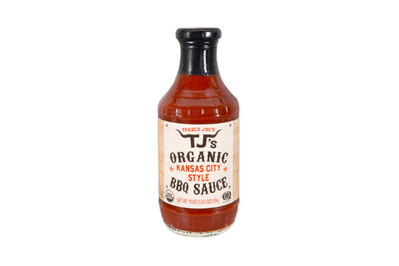
Top pick,A versatile do-it-all sauceTrader Joe’s Organic Kansas City Style BBQ Sauce
Trader Joe’s Organic Kansas City Style BBQ Sauce
This sauce works as a condiment and for grilling; it’s smoky with a good balance of acid and sweetness.
Buying options:$3 from Trader Joe’s, opens in a new tab
in-store purchase only
The Trader Joe’s Organic Kansas City Style BBQ Sauce is a smoky sauce that did well in our taste tests and even better on the grill. We asked for a sauce that could do it all, and we got it. It’s a pantry whiz, able to spruce up chicken, pulled pork, or even the humble chicken nugget.
Thick and pulpy, this jack-of-all-trades has enough body to coat a fry but is still loose enough to brush onto meat. It’s tomato-forward and slightly sweet, with enough smoke to be pleasant without blowing out your palate.
When basted on a chicken thigh and grilled during our testing, the hickory smoke flavor bloomed, and the caramelized sugars made the flavors of the sauce more complex.
Unlike some of the more cloying sauces we tasted, which were loaded with high-fructose corn syrup, the sweetness in the Trader Joe’s sauce, which comes from a mix of organic cane sugar, organic brown sugar, and organic molasses, was balanced and gentle. And at $3 for a 19-ounce bottle, it also offers good value, especially for an organic option.
The best barbecue sauce for cooking
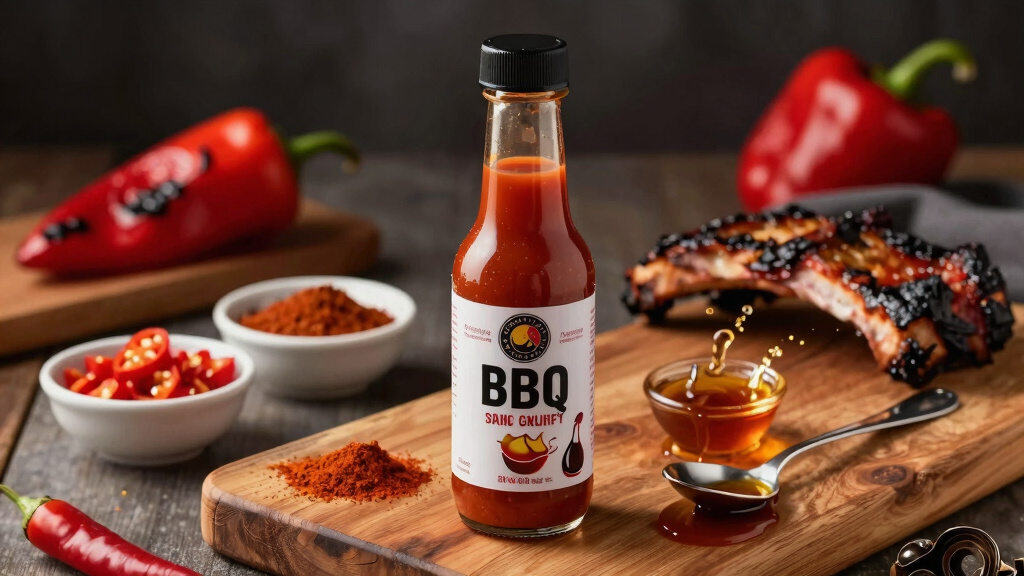
Best for…
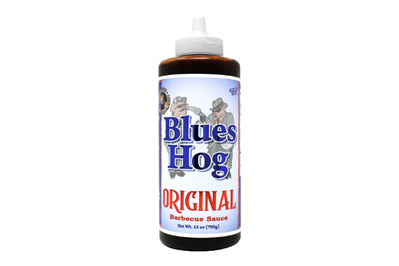
Best for…,Best for cookingBlues Hog Original BBQ Sauce
Blues Hog Original BBQ Sauce
The legit smokehouse flavors of this sauce just make sense when basted on a protein and grilled, but the sauce’s syrupy texture and sweetness don’t exactly work as a dipping sauce.
Buying options:$10 from Blues Hog, opens in a new tab
If you’re looking for a sauce that would be right at home in a plastic squeeze bottle at a classic barbecue joint, it’s Blues Hog Original BBQ Sauce.
It’s balanced and well spiced, with lots of black pepper and cumin to round out the sweetness, and it shines when paired with protein and fire. Visually, it’s a shiny mahogany, almost like a lacquer, with visible spice flecks throughout, and it coats meat beautifully when grilled.
Blues Hog performed best as a basting sauce and as an ingredient. When brushed on a chicken thigh and grilled, it stayed shiny but became slightly tacky as it set (a good thing), spreading evenly over the meat so you got a hit of caramelization with every bite. It was also stellar mixed into pulled pork. The spice stood up to the pork’s fattiness without overpowering the taste of the meat itself.
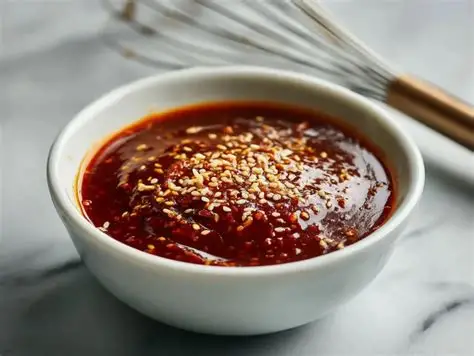
Blues Hog was a favorite of our visiting barbecue expert, Chris Prieto of Prime Barbecue, who says it’s a secret weapon on the competitive barbecue circuit. “If you’re a bad barbecue cook, this sauce makes you a good barbecue cook.”
Even though tasters found all of our picks a little sweet, Blues Hog was overtly so. One called it “insipid when not eaten with meat.” That sweetness does mean it has plenty of sugars that caramelize with heat though, a necessity when it comes to barbecue.
However, Blues Hog’s syrupy consistency, high-pitched sweetness, and cumin-forward flavor didn’t lend well to dipping. If you’re looking for a dunker for fries or nuggets, consider one of our other picks.
Blues Hog is a pretty widely available sauce too, sold in some Walmart and Ace Hardware locations across the country. But if you can’t find it near you (our closest Walmart didn’t carry it), you can also order directly from Blues Hog.
AdvertisementSKIP ADVERTISEMENT
The best barbecue sauce for dipping
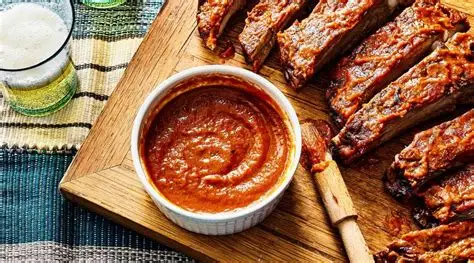
Best for…
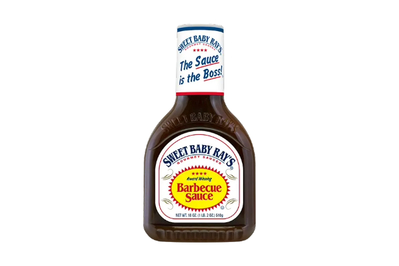
Best for…,Best for dippingSweet Baby Ray’s Original Barbecue Sauce
Sweet Baby Ray’s Original Barbecue Sauce
This widely popular, and widely available, sauce is perfect for dipping and using as a condiment.
Buying options:$2 from Walmart, opens in a new tab
$3 from Target, opens in a new tab
Sweet Baby Ray’s is ubiquitous, the Heinz of barbecue sauces: thick, glossy, deeply familiar-tasting, and available in just about every grocery store we’ve come across. Nothing coats a fry or a chicken nugget quite as nicely as Sweet Baby Ray’s. “It’s a crowd-pleasing dipping sauce,” noted one taster.
This barbecue sauce is thick and viscous, holding its shape when squeezed from the bottle (again, think Heinz). While the Blues Hog sauce runs across a plate and the Trader Joe’s appears almost pulpy, Sweet Baby Ray’s is ultrasmooth, glossy, and homogeneous.
But our tasters found it polarizing. Half felt it was cloying and caustic, while the rest marked it as a favorite. Black pepper cuts through the sauce and helps tamp down the corn-syrup sweetness that otherwise threatens to take it over. It leaves a pleasant tingle on the tongue, and one taster even detected a richness that leaned into dried-fruit territory.
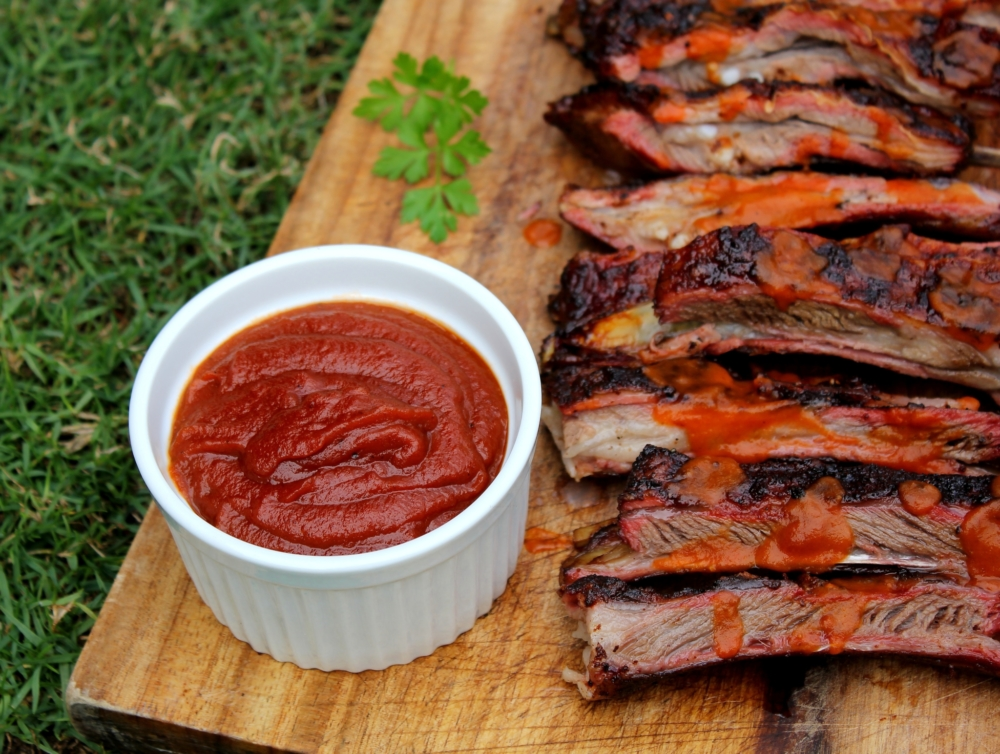
When basted onto a chicken thigh and grilled, the resulting texture was so gloopy that I couldn’t finish the thigh. Despite that, the heat from the grill toned down the sweetness, with one tester noting that cooking it made the spices more evident.
If you do opt for a basted application, cutting it with liquid should thin it out enough to get around that gloopy texture problem (Chris Prieto of Prime Barbecue suggests apple juice). The Evolution of BBQ Sauces: Discover the Delicious Journey From Simple to Spectacular
By Frank Murray / Barbecue
Table of Contents

Key Takeaways
- BBQ sauces have evolved from simple vinegar, pepper, and salt blends to complex and diverse flavors, influenced by regional ingredients and local culinary traditions.
- Key regional variations include Carolina’s tangy vinegar-based sauces, Kansas City’s rich and sweet tomato-based sauces, and Texas’s bold flavors with smoky undertones, each reflecting local tastes and styles.
- Modern innovations in BBQ sauces emphasize health-conscious trends, offering low-sugar and natural ingredient options while introducing unique flavor combinations for diverse palates.
- Global influences, such as South Korean, Argentinian, and Middle Eastern BBQ styles, have enriched the BBQ sauce landscape, resulting in exciting fusion sauces that celebrate culinary diversity.
When it comes to BBQ, the sauce can make or break the experience. I’ve always been fascinated by how these flavorful concoctions have evolved over time, transforming from simple blends of ingredients to the complex and diverse sauces we enjoy today. Whether you prefer a tangy vinegar-based sauce or a rich, sweet glaze, there’s a story behind every bottle.
The Origins of BBQ Sauces
BBQ sauce holds a special place in my heart, enhancing flavors and making gatherings memorable. The journey of BBQ sauces is fascinating, rooted in rich history and tradition.
Early Ingredients and Preparations
Early BBQ sauces usually featured simple ingredients. Cooks combined vinegar, pepper, and salt as a primary base. These basic blends often relied on regional ingredients, like mustard or molasses, to add a kick. Gradually, cooks started experimenting with fruits and spices. For instance, adding tomatoes in the 18th century marked a significant shift. These early sauces helped preserve meat while adding flavor, kicking off the tradition of BBQ that we cherish today.
Regional Variations in the Beginning
Regional variations shaped the identity of BBQ sauces from the start. In the Carolinas, I often find vinegar-based sauces that pack a punch. Texas offers thick, tomato-based sauces fused with spices and smoky flavors. Kansas City’s signature blend combines sweetness with tangy notes, mixing molasses and vinegar for balance. These differences highlight how local tastes and ingredients influenced BBQ traditions. Every region tells a unique story through its sauce, making BBQ a true culinary adventure.
The Rise of Regional Styles
Regional BBQ styles showcase the rich diversity of flavors that reflect local traditions and preferences. Each area celebrates its unique ingredients and techniques, creating a delicious tapestry of BBQ sauce that I love to explore.
Carolina BBQ Sauce
Carolina BBQ sauce stands out with its tangy, vinegar-based profile. I appreciate the way the vinegar cuts through the richness of pork, making each bite feel balanced. While there are variations across the Carolinas, two main types dominate: Eastern and Western. Eastern sauce is simple, featuring mostly vinegar, pepper, and spices, while Western style adds a touch of tomato for sweetness. Both bring a bright punch that elevates any barbecue feast.
Kansas City BBQ Sauce
Kansas City BBQ sauce embraces a rich, thick, and sweet flavor profile. This sauce often features tomatoes and molasses, giving it that signature sweetness I can’t resist. It pairs perfectly with a variety of meats, from ribs to burnt ends. I enjoy the complexity of flavors you can find in this sauce, including hints of smoke, spice, and a touch of tang. It’s versatile enough to complement almost any BBQ dish, making it a must-have in my grilling arsenal.
Texas BBQ Sauce
Texas BBQ sauce reflects the state’s bold and hearty attitude. Often tomato-based, these sauces vary in heat and sweetness, enhancing the traditional brisket and ribs Texans know and love. I appreciate how some recipes incorporate ingredients like chili peppers or mustard, creating a kick that truly embodies the Texan spirit. No matter how it’s made, Texas BBQ sauce usually shares a smoky depth that perfectly complements the robust flavors of slow-cooked meats, a staple of my backyard grilling sessions.
Modern Innovations in BBQ Sauces
Modern BBQ sauces embrace creativity and health, reflecting today’s diverse culinary landscape. As I explore new flavors, I appreciate how innovations spice up classic techniques while catering to health-conscious eaters.
Health-Conscious Trends
Health-conscious trends dominate the BBQ scene, focusing on natural ingredients and reduced sugars. Many brands offer low-sodium or sugar-free options, catering to health-minded barbecue enthusiasts. Alternative sweeteners, like honey or agave, often replace refined sugars, giving sauces a unique taste without compromising health. Organic and gluten-free labels are increasingly common, ensuring more people can enjoy their favorite flavors without worry. Barbecue sauce made from fresh fruits or vegetables, such as mango or roasted red peppers, adds nutrition while enhancing the flavor profile.
Unique Flavor Combinations
Unique flavor combinations transform traditional BBQ sauces into something exciting. I find inspiration in sauces that blend unexpected elements, like chipotle and peach or whiskey and maple. Asian-inspired flavors, such as teriyaki or hoisin, add an intriguing twist to classic recipes, creating fun fusion BBQ dishes. Craft brewers have also jumped on board, incorporating their beer into sauces for a distinct flavor this grilling season. By experimenting with local ingredients like craft hot sauces or artisanal mustards, I’ve discovered that every backyard cookout can become a gastronomic adventure.
Global Influence on BBQ Sauces
BBQ sauces reflect a rich tapestry of flavors from around the world. The interplay of international styles and fusion creations showcases how diverse culinary traditions unite over a grill.
International BBQ Styles
International BBQ styles bring unique flavors and techniques to the grilling game.
- South Korean BBQ: Known for its marinades, South Korean BBQ features gochujang, a fermented chili paste that adds heat and depth. It’s common to grill meats like bulgogi and short ribs, often served with a side of ssamjang, a savory dipping sauce.
- Argentinian Asado: The asado tradition highlights simple yet powerful seasonings, often using chimichurri. This vibrant sauce combines parsley, garlic, vinegar, and oil, enhancing the flavors of grilled meats like beef.
- Middle Eastern Kebabs: Middle Eastern styles incorporate yogurt-based marinades that tenderize meats, while za’atar adds a herby kick. Grilled kebabs often feature a blend of spices, highlighting fresh ingredients and a smoky finish.
Fusion Sauces
Fusion sauces mix and match flavors from different cultures, breathing new life into traditional BBQ.
- Chipotle Peach: This sweet and spicy combination infuses BBQ with fruity notes. It works wonderfully on grilled chicken or pork, providing a bright and zesty finish.
- Whiskey Maple Glaze: Combining American whiskey with maple syrup adds a rich, smoky sweetness to ribs or brisket. This sauce captures the essence of classic BBQ while pushing boundaries.
- Asian Stir-fry BBQ: Blending soy sauce, ginger, and sesame oil creates a unique marinade ideal for grilled vegetables and meats. It offers an exciting twist on traditional BBQ flavors, perfect for backyard cookouts.
Exploring global influences and fusion sauces enriches my BBQ experience, turning each backyard gathering into a culinary adventure.
Conclusion
BBQ sauce has come a long way from its humble beginnings. It’s fascinating to see how regional flavors and global influences have shaped the sauces we enjoy today. Each bottle tells a story of tradition and creativity that adds a personal touch to our grilling experiences.
As I explore new flavors and innovative combinations, I can’t help but feel excited about what the future holds for BBQ sauces. Whether I’m sticking to classic recipes or experimenting with the latest trends, there’s always something new to discover. So next time you fire up the grill, remember to savor not just the food but the rich history and evolution behind those delicious sauces.
Help us out! Share this with your friends.
About The Author

Frank Murray
Frank is a BBQ lover. Every chance he has is spent barbecuing for the family and friends. There’s nothing like a summer of hanging out in the back yard, relaxing, playing some games, having a nice cold brewski, and barbecuing up a delicious meal. Frank created Grilling Dude to share his passion and knowledge with you.
More Articles You Might Like…

how long does beef jerky last

how long do onions last

snake river farms review

Other barbecue sauces worth considering
If you want a mustard-based barbecue sauce: Our tasters were drawn to the brightly colored Ogre Sauce, a Carolina gold-style mustard-based sauce that snuck its way into our lineup of Kansas City–style contenders (thanks to a glowing review from a Wirecutter staffer, a nondescript name, and a vague online description).
The mustard lent a fantastic zip that awakened our palates, and the sauce was downright delightful on grilled chicken — the heat coaxed out its sweetness and mellowed the mustard’s bite. We’d also try slathering Ogre Sauce on a sandwich, and it was even good for dunking nuggets.
The only reasons it’s not a pick are because it falls outside the perimeters of the smoky-sweet flavor profile we were testing for in this guide, and because we haven’t tasted enough sauces in this style to fairly call it the best.
If you want an umami-rich, Japanese-style sauce: The widely available Bachan’s Japanese Barbecue Sauce is a thin, aromatic, soy-forward sauce with lots of ginger, like a gyoza dipping sauce or a teriyaki-style glaze.
It was the one sauce that our tasters unanimously liked: We yapped excitedly about using it in stir-fries, as a marinade for meat or tofu, or dousing it on a rice bowl topped with a runny egg. (Which, I can confirm, is amazing.)
So what’s the problem, you ask? Bachan’s is too runny to coat a chicken nugget, and it was watery when mixed into pulled pork. Like the Ogre Sauce, while we loved it for many reasons, it was too much of a departure from what we were seeking in a barbecue sauce for it to earn pick status.
AdvertisementSKIP ADVERTISEMENT
The competition
The sweet-leaning Bull’s-Eye Original Barbecue BBQ Sauce gained favor among our testers as a better version of a McDonald’s-esque barbecue sauce, like what you’d find coating a McRib. But when basted on a chicken thigh and grilled, the heat erased much of its charm and brought out a processed, plastic-y taste that every taster found objectionable.
Stubb’s Gluten Free Original Barbecue Sauce on its own was strong and acid-forward, with a black pepper kick and a balanced sweetness. But when mixed into pulled pork, that strong flavor disappeared and tasted like virtually nothing.
Kraft Original Slow-Simmered Barbecue Sauce had the most objectionable texture of the bunch. It moved like one solid, tacky mass. It was sticky in the pulled pork, and mixing in some cooking liquid wasn’t enough to save it.
Our tasters found the Great Value Original Barbecue Sauce acrid and the texture nearly too thick to swallow. One tester even noted that the sauce had broken, with an oil slick floating on top.
The 365 by Whole Foods Market Original Barbecue Sauce had a cloying sweetness that dominated the sauce.
Kinder’s Original was, simply put, boring. According to one taster, it had a sharp, artificial flavor.
Jack Daniels Original BBQ Sauce was another sauce that was criminally sweet. One taster noted it was “so sweet there’s no way the first ingredient isn’t high-fructose corn syrup.” She was close: It’s cane sugar.
Burman’s Original BBQ Sauce presents like a knockoff of Sweet Baby Ray’s, down to the very similar white and yellow packaging. The Aldi-brand sauce was too sweet and too gloopy for our tasters.
Woodstock Organic Hickory Bar-B-Q Sauce was overly tomato-forward, with little else going on. It didn’t really taste like barbecue sauce, and one taster likened it to a “grown-up” ketchup.
The Bone Suckin’ Sauce, Sweet Southern was too sweet in an odd, overripe fruit kind of way. Plus, it was alarmingly chunky for a barbecue sauce, with large pieces of something (our guess is garlic) floating around.
Momofuku Sweet & Savory Korean BBQ Sauce is overreduced and acrid, cloying, and sticky, tasting overwhelmingly of burnt hoisin.
AdvertisementSKIP ADVERTISEMENT
How we picked and tested
Narrowing down the parameters for what constitutes “barbecue sauce” for this taste test was hard. Regional differences in the barbecue world are vast and complex, and sauces are no exception. There’s a St. Louis–style sauce, Carolina gold sauce, Texas-style sauce, and even an Alabama white sauce. Some styles, like Memphis’s dry rub ribs or East Texas’s brisket, opt for no sauce at all.
But what most people think of when they say “Pass the barbecue sauce” is the rich, mahogany-colored sweetness of a Kansas City–style sauce. It’s the style that most store-brand barbecue sauces emulate, too.
With that in mind, we limited our tests mainly to Kansas City–style sauces that could be found on supermarket shelves. We were seeking a viscous sauce, thick enough to brush onto food without running off, that balances rich, savory sweetness with acid and spice.
For sauces that came in multiple flavor variations, we chose the “original recipe” version, or what seemed closest to it.
To learn more about what makes a great barbecue sauce, we interviewed champion pitmaster Chris Prieto, owner of Prime Barbecue in North Carolina, and judge of many a barbecue sauce competition. We also invited him to participate in our tastings.
While regionally the idea of “barbecue” connotes long cook times over low heat and smoking wood (often called cooking “low and slow”), in our testing we wanted to acknowledge that a significant number of people use barbecue sauces in more practical applications: home cooking, grilling, slathering, and dunking.
After rounding up 18 candidates, we ran them through a series of tests.
For the first round of testing, we sampled the sauces straight up with spoons, and tried them as a dipping sauce for fries and chicken nuggets seasoned with salt only (they happened to be dino nuggets). Sauces that were utterly objectionable, acrid, burnt, or otherwise inedible were cut after this test.
All 22 pounds of pork shoulder, ready for their four-hour cook in the oven. Maki Yazawa/NYT Wirecutter
For the second test, I braised 22 pounds of pork shoulder low and slow in an oven to make pulled pork, seasoned only with salt. We mixed a half cup of sauce into a pound of pulled pork, adjusting to make sure each one had the chance to be served at their optimal sauce-to-pork ratio.
We sampled each mixture, taking notes and cleansing our palates with green grapes and Saltines as we went. For this round, we were interested in testing the sauce as an ingredient, to see how it mixed in and stood up (or didn’t) to other strong flavors. Barbecue chef and expert Chris Prieto joined us for this day, providing his opinion on the finalist sauces.
Connie Park/NYT Wirecutter
After narrowing down our contenders to six finalists, I toted the sauces to a location where a colleague was testing grills. I brushed them on plain grilled chicken thighs and grilled the thighs for 15 minutes, basting them again about halfway through. We tasted the grilled chicken, noting how the heat had changed the flavors and textures of the sauces.
This article was edited by Gabriella Gershenson and Marguerite Preston.
Sources
- Chris Prieto, owner and founder of Prime Barbecue, phone interview, February 5, 2025
Meet your guide

Abigail Bailey
Abigail Bailey is the updates writer for Wirecutter’s kitchen team. She has an MS in publishing digital and print media from NYU and previously worked for Good Housekeeping. She spent four years in Louisiana perfecting her gumbo recipe and always looks for a reason to make it.
AdvertisementSKIP ADVERTISEMENT
Comments
Be kind. Ask questions. Stay on topic. Discriminatory language, personal attacks, promotion, and spam will be removed. Please read our comments policy before commenting. We independently review everything we recommend. If you have questions about our editorial standards or business model, read about how Wirecutter makes money.Name (required)Add comment